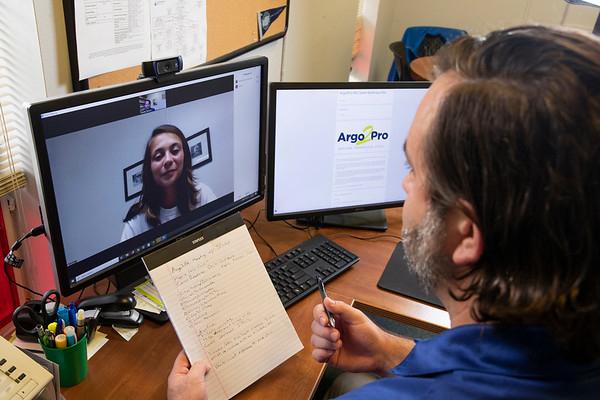
So you have applied for a job and the employer has called and wants to interview you. Now what? The interview process can be intimidating and confusing if you have never been through it.
Types of Interviews
Traditional and behavioral are the two most common interview formats employers use when interviewing candidates for a job. Each of these formats is used in a different way to assess a candidate’s skills and abilities. The differences in these two formats are described below:
Traditional interviews tend to focus on your resume. Interviews use your resume as a guide to explore your decisions and achievements through academics, work, campus, and community involvement. The interview questions focus on you beliefs, attitudes, professional or management styles, interactions with others, and how you would handle or behave in hypothetical situations
Behavioral interviews focus on actions and behaviors and not on hypothetical situations. The purpose of this type of interviewing is to evaluate past behaviors and use them as predictors of future behavior. Instead of concentrating on how you would handle a situation, the interviewer focuses on how you did handle the situation. They will ask you about details and not generalizations concerning events. Typically, interviewers who conduct behavioral interviews are trying to collect and evaluate information about behaviors that are needed to be successful on the job.
In these types of interviews, you will be asked to give examples of how you handled certain situations. These questions may range from, “Tell me about a time you were in conflict with a co-worker” or “Tell me about a time when you demonstrated leadership skills.” When you are asked questions of that nature, remember to use the STAR* technique.
STAR stands for:
Below is an example of how you might use the STAR technique to answer the question, “Tell me about a situation in which you demonstrated leadership skills.”
You may also use this technique when addressing tough questions like, “Tell me about a time you had a conflict with a manager or co-worker”, or “Tell me about a time you made a mistake in the classroom or on the job.” Bu describing what you learned in the Results step, you may be able to demonstrate how you turned a negative situation into a positive one.
*Development Dimensions International, Inc. of Pittsburgh, Pennsylvania, claims the STAR technique as their “Copyrighted Intellectual Property.”