


The Archaeology Institute at the University of West Florida is an educational, research and service facility concerned with the prehistoric and historic archaeological resources of the northwest Florida region.

The Archaeology Institute at the University of West Florida is an educational, research, and service facility concerned with the prehistoric and historic archaeological resources of the northwest Florida region. Archaeological investigations are conducted in both terrestrial and underwater settings. The Institute has a professional staff of archaeologists. Additional staff and students are regularly employed through grant and contract funds.
Study Archaeology at UWF
Administratively, the Archaeology Institute is part of Anthropology and Archaeology and provides educational support to the Anthropology Department’s undergraduate and graduate degree programs in Pensacola. Students obtain extensive training and hands-on experience in the classroom, field school, laboratory, and fieldwork settings. We also provide training and services in bioarchaeology and forensic anthropology.
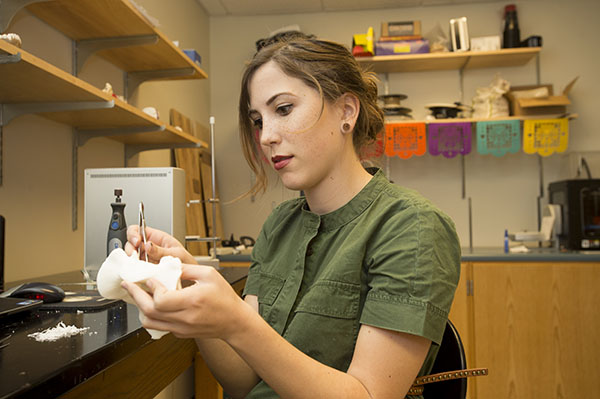
The Department of Anthropology is home to the University's academic program in anthropology, where both faculty and students have opportunity to excel at research and creative activities, and to engage in the practice of anthropology at the University and within the community or in other settings around the world.
Anthropology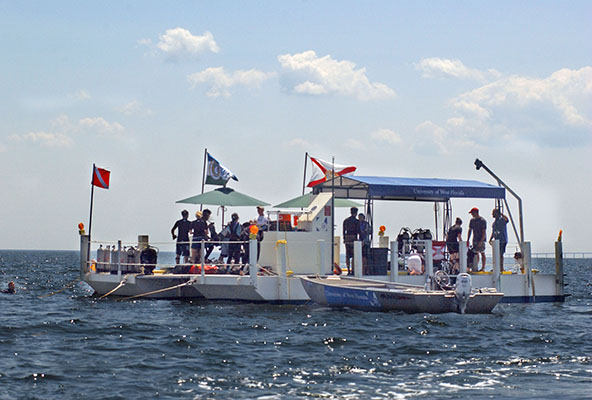
Learn more about the archaeological site of the Luna settlement – the first multi-year European settlement in the United States – in a developed neighborhood in Pensacola. The artifacts discovered are evidence of the Spanish settlement by Tristán de Luna y Arellano from 1559 to 1561, the earliest multi-year European colonial settlement ever archaeologically identified in the United States.
Tristan de Luna y Arellano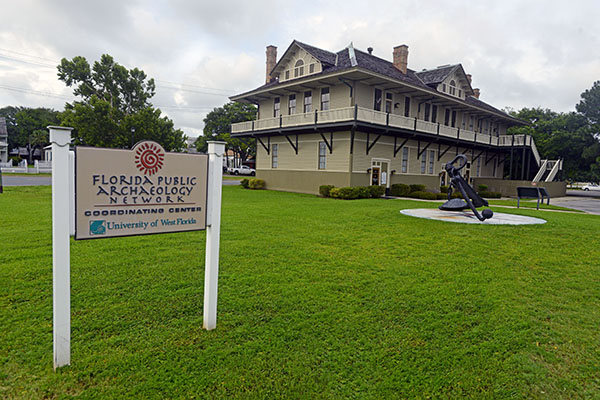
The Florida Public Archaeology Network's mission is to promote and facilitate the conservation, study and public understanding of Florida's archaeological heritage through regional centers.
Archaeology News
-
Tue, 24 Mar 2026 13:30:00 +0000Tue, 24 Mar 2026 13:30:00 +0000UWF Archaeology Institute survey uncovers pre-Columbian artifacts ahead of stadium infrastructure work
-
Wed, 28 Jan 2026 14:30:00 +0000Wed, 28 Jan 2026 14:30:00 +0000UWF Archaeology Institute receives international award for research
-
Wed, 01 Oct 2025 15:02:01 +0000Wed, 01 Oct 2025 15:02:01 +0000UWF secures $1.5M U.S. DOE grant to expand civic education opportunities
